The Artistic Evolution through AI
Naava Schottenstein, PhD – CEO & Founder of BrainBloom Academy, LLC

Introduction
Imagine entering a gallery where the canvases pulse not only with the genius of traditional artists but also with vibrant creations made by artificial intelligence. This melding of technology and traditional art forms marks a transformative era in the art world—one where AI is not just a tool but emerges as an artist, pushing the boundaries of creativity and artistic expression.
Artificial Intelligence in art is reshaping our understanding of creativity, augmenting human ingenuity, and expanding the limits of what can be achieved. From generating visually arresting works to personalizing art experiences, AI is making significant inroads into realms previously dominated by human artists alone.
This blog post dives into the ways AI is revolutionizing the art landscape, opening up new possibilities for creativity and altering how we perceive and interact with art.
AI as a Tool for Creation
In the ever-evolving world of art, artificial intelligence has emerged as a pivotal tool, opening up new frontiers of creative expression. Artists, traditionally reliant on brushes, palettes, and canvases, are now turning to algorithms to craft complex and intricate artworks that challenge the conventional boundaries of art.
AI’s ability to process vast amounts of data and recognize patterns allows it to generate visual elements with a level of detail and complexity that often surpasses what is humanly possible. This capability enables artists to experiment with new textures, shapes, and compositions, resulting in artworks that are not only unique but also incredibly intricate.
One of the most notable AI technologies revolutionizing this space is Generative Adversarial Networks (GANs). GANs consist of two neural networks—generators and discriminators—that work against each other to produce increasingly refined results. The generator creates images based on set parameters, while the discriminator evaluates them against a dataset of human-made artworks. Through this continuous interplay, the AI learns and improves, eventually creating art that can mimic the aesthetic and technique of human artists—or diverge into new, unprecedented artistic styles.
Artists like Refik Anadol and Anna Ridler have harnessed the power of GANs to stunning effect. Anadol’s installations, for example, involve AI that interprets vast data sets—from oceanic weather patterns to architectural designs—to create mesmerizing visual experiences that transform physical spaces into living art. Ridler’s work, meanwhile, uses GANs to explore themes of decay and growth, creating floral animations that never repeat the same pattern, constantly evolving in response to their digital environment.
Through AI, artists are not only expanding the scope of what can be created but are also engaging in a deeper exploration of the relationship between technology and human creativity.
Collaboration Between AI and Artists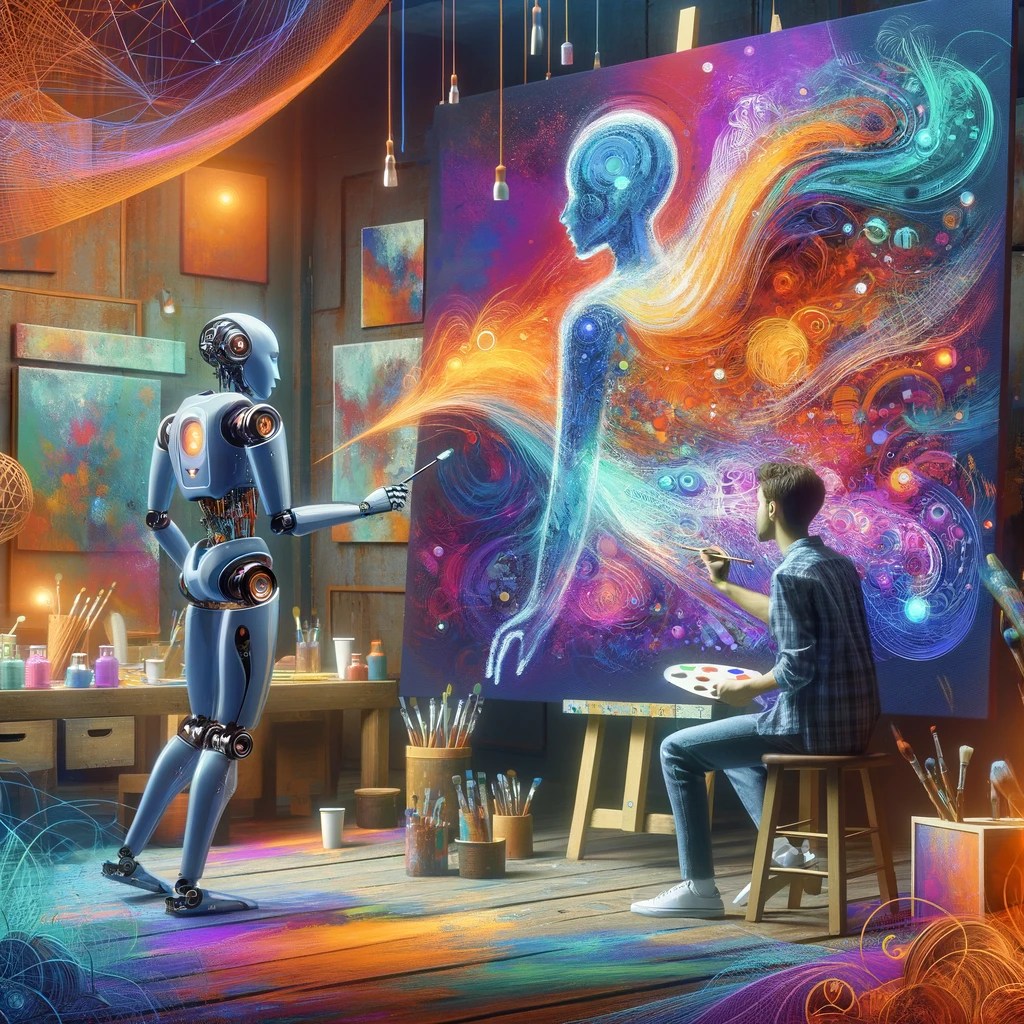
The interaction between AI and artists often goes beyond the use of tools—it’s a dynamic partnership. This collaboration can range from AI suggesting modifications to autonomously generating elements within a piece of art, effectively acting as a co-artist in the creative process.
AI technologies such as deep learning have enabled the creation of systems that can analyze an artist’s previous works and generate suggestions for new projects. These suggestions might include alterations in style, color schemes, or compositions that retain the artist’s signature while pushing their boundaries. This collaborative process allows artists to explore new creative pathways that they might not have considered before.
A striking example of such collaboration is seen in the work of Mario Klingemann, a pioneer in the use of neural networks in artistic creation. Klingemann’s AI collaborates with him by analyzing thousands of artworks from different periods and styles to suggest new visual patterns and motifs. His series, “Memories of Passersby I,” features a machine installation that generates portraits in real-time, combining elements from historical art with contemporary aesthetics. The installation continuously creates faces that no human has ever seen, each unique and fleeting, challenging our concepts of identity and existence.
Similarly, artist and researcher Sougwen Chung explores the concept of “collaborative drawing” where she and robotic arms draw simultaneously, blending her artistic expressions with the precision and variations introduced by AI. This partnership not only enhances the creative process but also raises intriguing questions about the nature of art and creativity in the age of machines.
These collaborations reveal how AI can act as a catalyst in the artistic process, offering new ways to enhance and explore human creativity. As AI continues to evolve, its role as a collaborator may become as common as the paintbrush and canvas.
Personalization and Customization
In the realm of art, personalization isn’t just about owning a unique piece; it’s about experiencing art that resonates on a deeply personal level. AI is at the forefront of this transformation, enabling the creation of art that adapts and responds to the viewer’s own tastes, emotions, or even physical reactions.
AI-driven personalization involves using machine learning algorithms to analyze data from viewers’ interactions with art. This data can include direct input like choices in color or form, or more passive inputs such as viewing time, facial expressions, and heart rate. These inputs feed AI systems that then adjust the artwork in real-time, creating a dynamic piece that mirrors the emotional state or preferences of the viewer.
One fascinating implementation of this technology is seen in the work of artist Daniel Ambrosi. He uses AI to transform traditional landscape photographs into dream-like scenes that evolve in response to the viewer’s interactions. By employing eye-tracking technology, his installations change elements of the artwork based on where and how long a viewer focuses on different parts of the image. This makes each viewing of the artwork a unique experience, tailored to the individual observer.
Another groundbreaking project is “Eunoia II,” created by artist Lisa Park. This installation uses biometric sensors to monitor the brainwaves of participants, translating their emotions into ripples on the surface of water contained in large dishes. Each dish is equipped with a speaker that vibrates at a frequency which corresponds to the participant’s emotional state. The resulting patterns and movements in the water are both visually and auditorily dynamic, creating a real-time representation of human feelings.
This innovative use of technology provides a highly personalized and emotive experience, reflecting the inner emotional states of the participants through the interplay of sound and visual effects. “Eunoia II” stands as a profound example of how AI and biometric technology can transform audience interactions into captivating art, making it an immersive, interactive journey through the landscape of human emotions.
Through these advanced applications, AI is not just changing how art is made, but also how it is experienced, making it more engaging, interactive, and personal than ever before.
Accessibility and Democratization
The advent of AI in the art world has been nothing short of transformative, not only in how art is created but also in who can create it. Traditionally, art production required mastery of specific skills and access to certain materials, but AI is changing that paradigm. Today, AI tools are democratizing art creation, making it accessible to anyone with a creative vision, regardless of their technical skill level.
AI-driven platforms have emerged as powerful enablers for aspiring artists and hobbyists. These platforms use algorithms to assist users in creating sophisticated artworks that might otherwise require years of training. For example, platforms like DeepArt and Artbreeder allow users to transform their photographs into artworks in the styles of famous painters or to blend and mutate images to create fantastical visual hybrids. Users can input images, adjust a few settings, and the AI takes care of the complex processes involved in rendering the final artistic output.
Moreover, these AI tools extend beyond mere novelty; they provide a genuine creative outlet for those who may not have traditional artistic training. They lower the barriers to art creation, enabling a more inclusive range of voices and visions to be expressed and shared. This democratization is not only expanding the definition of who an artist can be but also what art can be.
In addition to individual creativity, educational platforms that integrate AI are now teaching the basics of art and design to students in an interactive and engaging way. For example, Google’s AutoDraw pairs machine learning with drawings created by talented artists to help users craft quick and beautiful sketches. This tool is particularly useful in educational settings, enhancing learning through an accessible and intuitive interface that encourages exploration and creativity.
The impact of AI on art’s accessibility and democratization is profound, opening up a world where art becomes a universal language that everyone can speak and understand.
Preservation and Restoration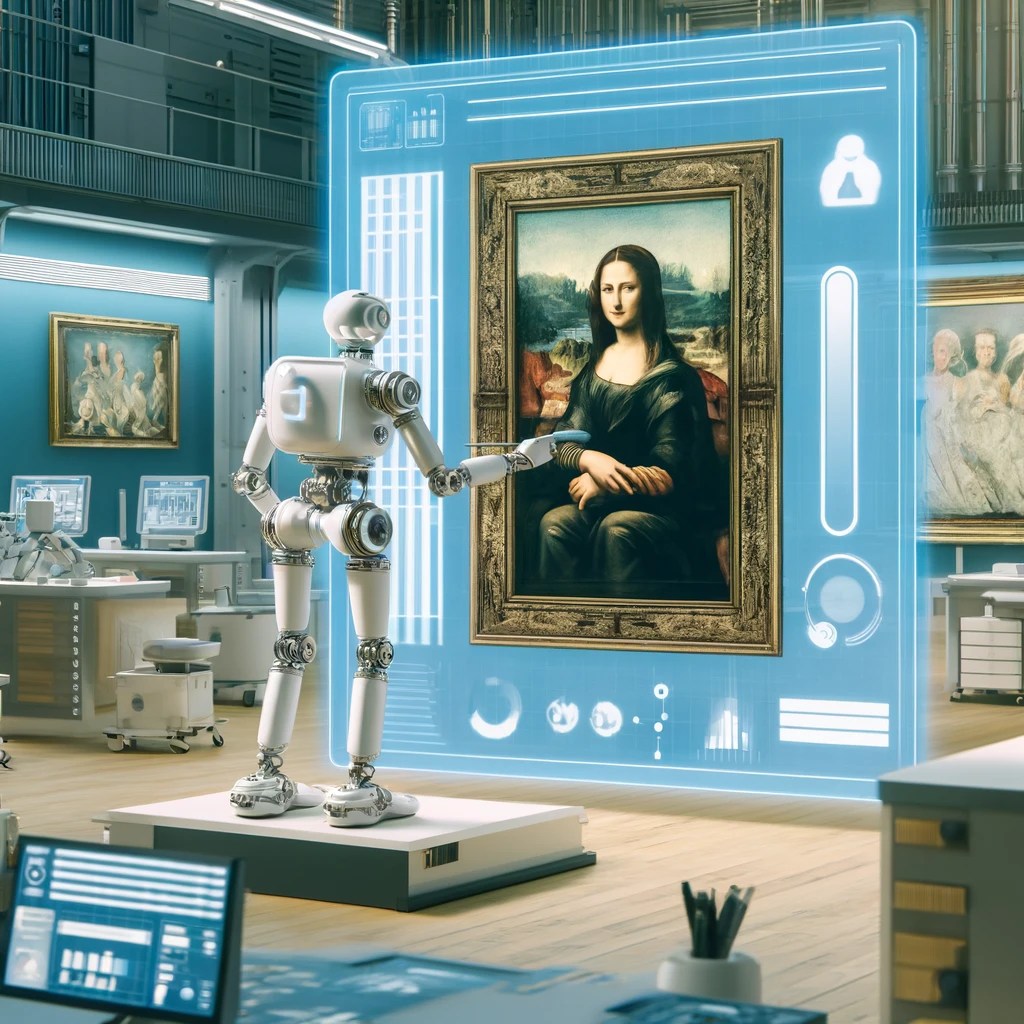
The integration of artificial intelligence (AI) into the field of art restoration and conservation has marked a revolutionary step in the preservation of cultural heritage. AI’s capability to analyze vast amounts of data including high-resolution images and historical records has significantly enhanced the restoration process, allowing for the accurate restoration of artworks that have deteriorated over time.
AI-Enhanced Analysis and Restoration
AI algorithms are adept at detecting and documenting minute details such as cracks, fading pigments, or surface anomalies that may not be easily visible to the human eye. This precision enables conservators to understand the extent of deterioration and undertake appropriate restoration measures. For instance, AI-powered image analysis helps in identifying the original colors and textures of artworks, which is crucial for faithful restoration. Moreover, AI can assist in removing dirt, stains, and other imperfections without damaging the original artwork.
Digital Reconstruction
One of the most significant contributions of AI in this field is its ability to reconstruct missing or damaged parts of an artwork. By learning from vast datasets of historical and preserved artworks, AI algorithms can generate images or predict the original appearance of damaged sections, thus aiding in the physical restoration process. This application of AI not only helps restore artworks but also contributes to a more comprehensive understanding of the artist’s original intent and the artwork’s historical context.
Collaborative and Ethical Considerations
While AI offers numerous benefits in art restoration, it is also essential to maintain a collaborative approach between AI tools and human expertise. The preservation of artworks should prioritize the authenticity and integrity of the original pieces, which requires the careful judgment and decision-making capabilities of experienced conservators. Additionally, ethical considerations must guide the extent to which AI is used, ensuring that the restoration does not alter the artist’s original work or historical accuracy.
Future Prospects
Looking forward, the potential for AI in art restoration continues to expand. Advancements in AI technology are expected to enhance the efficiency, accuracy, and accessibility of art restoration processes, making it possible to preserve more artworks and cultural artifacts for future generations. The ongoing development of AI algorithms promises to bring even more sophisticated tools to the field, further revolutionizing how cultural heritage is maintained and restored.
These advancements in AI-driven art restoration represent a blend of technology and tradition that ensures our cultural treasures are not only preserved but restored with a respect for their historical significance and artistic integrity.
For more detailed insights into how AI is transforming art restoration, you can explore articles and case studies on platforms like AI Art Kingdom and Mechatronai. These resources provide extensive information on the latest technologies and their applications in the field of art conservation.
Ethical Considerations in AI-Driven Art
As artificial intelligence (AI) continues to permeate the art world, it brings with it a host of ethical considerations that challenge our traditional understanding of creativity, authorship, and the authenticity of art. These issues are crucial as they delve into the very essence of what art represents in society and its humanistic roots.
Authorship and Originality
One of the primary ethical questions surrounding AI in art concerns authorship. When an AI system creates a piece of art, who is the true creator? Is it the AI, the programmer who designed the AI, or the artist who provided the inputs? This debate extends into the realm of copyright and intellectual property rights, which are traditionally based on human authorship. The lack of clear guidelines on these matters complicates how AI-generated artworks are perceived and valued in the art community and market.
Moreover, the issue of originality comes into play. AI often creates art by learning from existing styles and works, raising questions about the originality of its creations. Can a piece be considered original if it is generated based on patterns and elements learned from the works of human artists? This challenges the traditional concept of artistic originality and raises concerns about the potential for AI to dilute the uniqueness of human-made art.
Authenticity and Value
The authenticity and intrinsic value of AI-generated art are also hotly debated. Art traditionally carries an emotional and experiential component linked to the human condition—something that AI, as it currently stands, cannot experience. Thus, critics argue that while AI can mimic the technical aspects of art creation, it lacks the capacity to imbue its works with genuine human emotion and context, potentially impacting the emotional resonance and value people find in art.
Potential for Misuse
Another significant ethical concern is the potential misuse of AI in art. AI’s ability to replicate and generate artworks could be used unethically to forge artworks or deceive audiences, thereby compromising the integrity of the art market. Moreover, without proper regulations, there is a risk that AI could be used to mass-produce art, flooding the market with works that lack depth and meaning, thus undermining the livelihoods of human artists.
Navigating the Future
Navigating these ethical waters requires a collaborative effort between technologists, artists, legal experts, and policymakers. Establishing clear guidelines and ethical standards for the use of AI in art will be essential to ensure that it enhances rather than detracts from the art world. As AI evolves, continuous dialogue and examination of its role and impact in art will be crucial to address these challenges responsibly.
In conclusion, while AI presents exciting new possibilities in art, it also brings forth complex ethical questions that must be addressed to preserve the integrity and essence of art as a quintessential human endeavor. This ensures that AI serves as a tool for enhancing human creativity rather than replacing it, fostering an environment where technology and tradition coexist harmoniously.
Conclusion: The Future of AI and Art
As we’ve explored throughout this blog, the integration of artificial intelligence (AI) into the art world has been nothing short of transformative. AI has redefined the boundaries of creation, collaboration, personalization, and preservation in art, challenging traditional notions and opening up a realm of possibilities that were previously unimaginable.
Transformative Impact of AI on Art
AI’s role as a tool for creation has enabled artists to push the limits of their imagination, allowing them to explore new artistic territories and create works that blend human creativity with computational precision. In collaboration, AI acts as a partner that brings its own set of skills, enhancing the artistic process and leading to innovative outcomes that are the product of both human and machine effort. On the front of personalization, AI’s ability to adapt artworks according to the preferences and emotions of the viewer personalizes the art experience, making it more engaging and interactive. Moreover, in the realm of preservation and restoration, AI provides tools that can analyze, restore, and conserve artworks with unprecedented accuracy, ensuring that cultural heritage can be appreciated by future generations.
Future Outlook
Looking ahead, the potential for AI in art continues to grow. We can anticipate further advancements in AI technology that will refine its capabilities in generating more sophisticated and nuanced artworks. AI might also play a crucial role in making art more inclusive by lowering barriers for entry and allowing more people to express themselves creatively regardless of their technical skills. Additionally, as AI becomes more adept at understanding and replicating human emotions, we might see AI becoming more involved in the conceptual stages of art creation, potentially leading to new art forms and styles.
The ethical implications of AI in art—such as questions of authorship, originality, and authenticity—will continue to provoke debate. These discussions will be vital in shaping policies and practices that govern the use of AI in the art world.
Reflect
As we stand on this frontier of artistic innovation, it’s important for artists, collectors, art enthusiasts, and policymakers to reflect on what these changes mean for the future of art. How should we navigate the challenges and opportunities presented by AI? What measures should be taken to ensure that AI enhances rather than diminishes the human element in art?
Participate, create, and learn with BrainBloom Academy!
To enhance the exploration of AI’s impact on art, BrainBloom Academy invites you to join one of our AI art classes. Whether you’re a novice curious about the basics of digital creation or an experienced artist looking to incorporate AI into your work, our classes offer a unique opportunity to learn, create, and innovate. Engage directly with cutting-edge technology and discover how AI can expand your creative boundaries. Join us at BrainBloom Academy to step into the future of art!

